EXTREME Cinema
If you don’t like gross movies, move along - we are not reviewing Bibles here. I'm tired of horror fans being treated like they're morally compromised because they enjoy a good arterial spray.
Give Me Your Undesired: Horror, Consumerism, and the Market for Discomfort
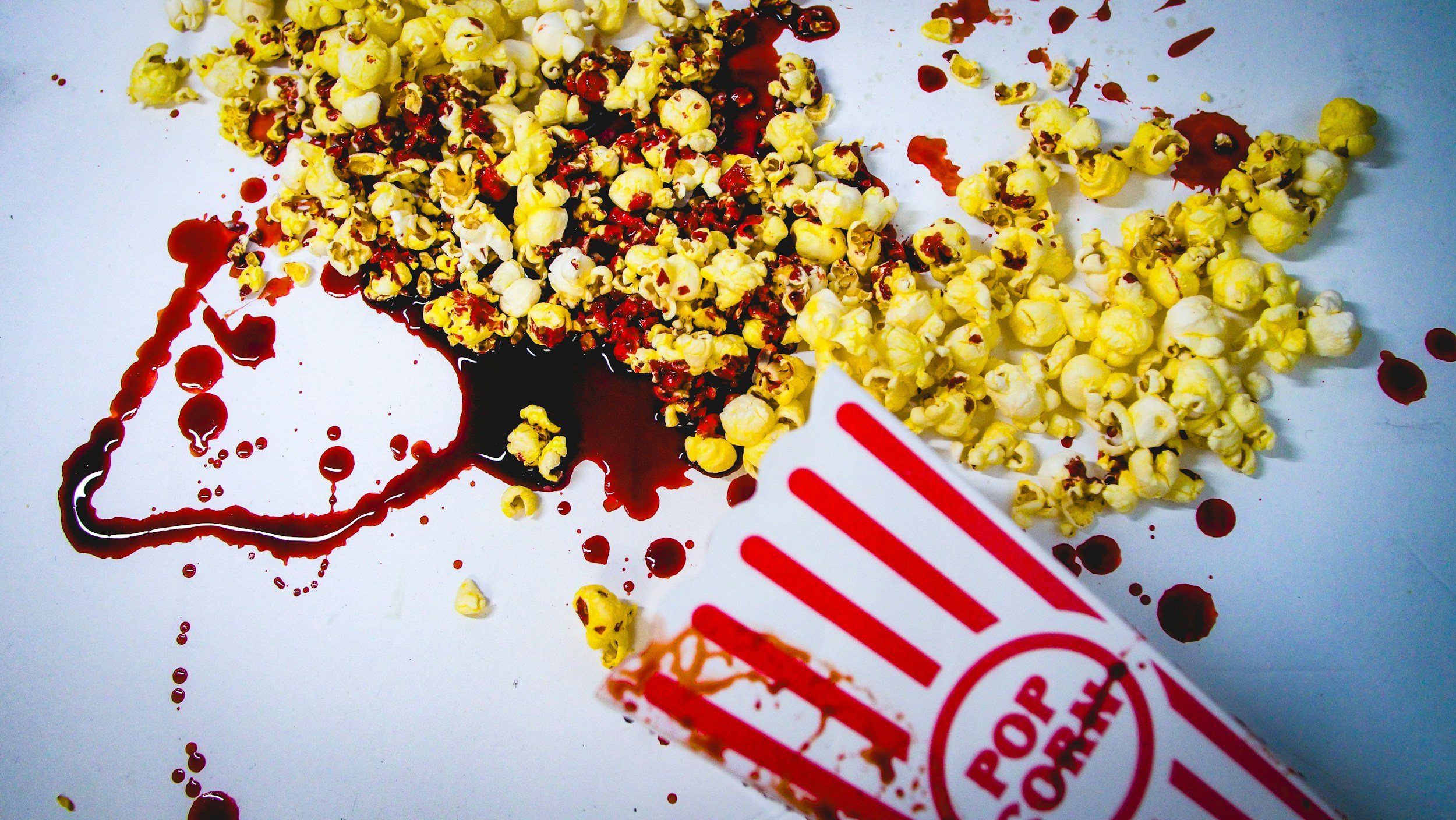
Give me your undesired, your gore. Your restless masses yearning for more.
Growing up in rural Minnesota, entertainment was scarce and curiosity was not. My rebellion came in the form of horror movies. Video games, VHS, and DVD covers promised forbidden things: monsters, mutilation, and evil. Horror was the perfect loophole. I could flirt with the unacceptable without actually crossing any lines.
I watched everything: slashers, creature features, body horror, and whatever bizarre title I could find in a rental store. Eventually, I stopped counting severed limbs and gallons of fake blood. I also stopped worrying about the inevitable question:
"Why would you watch that?"
Don’t shame my interests - I don’t shame yours.
The world is far more horrific than anything ever put to film.
There’s an assumption that horror fans enjoy suffering. I don’t believe that’s true.
What fascinates me is confrontation. Horror invites us to engage with terrifying situations from the safety of our own homes. It allows us to peer into the darkness, the unknown, and the unimaginable from a safe distance - it isn’t necessarily always about celebrating suffering. It’s about understanding it, processing it, and confronting the fears that already exist in the world around us.
Horror as an Invitation to Stare into Discomfort
A ripped-open torso. An exposed ribcage. Organs spilled across the floor.
A camera lingers in a dark hallway, drifts through a basement, pauses at the entrance of an attic. Horror films understand that what unsettles us is not only what we see, but what we anticipate lurking in the shadows.
Their stories are often driven by mental illness, obsession, grief, and madness. Beneath the monsters and gore lies something far more disturbing: an examination of human nature itself. Horror strips away social masks and forces us to confront fear, vulnerability, and the parts of ourselves we would rather ignore.
The genre is relentless in its demand for attention. Directors seem to challenge the audience directly: Look at it. Don't look away. I'm trying to scare you.
Yet horror is about more than fear. It is an invitation to sit with discomfort, to confront what disturbs us, and to explore the darker corners of the human experience. The monsters, the violence, and the shadows are often just vehicles for a deeper question: What happens when we are forced to face what we fear most?
Horror taught me there is a difference between being disturbed and being harmed. It allows us to approach fear on our own terms. We stare into the abyss knowing we can always turn off the television.
But the market understands something important:
We usually don't.
Horror as Consumption
As I researched extreme cinema, I realized something. The same forces that shape our economy shape our appetite for horror.
Capitalism does not merely produce goods. It produces desire.
Every successful product creates demand for a more intense version of itself. The logic is simple: more features, more stimulation, more novelty. Why would entertainment be any different?
Extreme cinema follows the same pattern. Filmmakers push boundaries. Audiences consume transgression. Markets reward escalation.
The Saw franchise is a perfect example.
The original film succeeded because it combined mystery and inventive violence, with a touch of self reflection. But success creates expectation. Each sequel needed bigger traps, more elaborate mutilations, and greater spectacle. The violence became the attraction. Pain became the product.
This is not a criticism of Saw specifically. It is a reflection of the economic logic surrounding it. In a market driven by growth, standing still looks like failure. Every sequel must offer something the previous one did not.
More blood.
More suffering.
More shock.
The audience learns to expect escalation, and the industry learns to provide it.
Production becomes sadistic. Consumption becomes masochistic. Both are rewarded.
Why We Keep Looking
Originally, I planned to watch a list of the most disturbing films ever made and write about the experience. Then I started reading plot summaries on Wikipedia.
That was enough.
There is a point where discomfort stops feeling revelatory and starts feeling industrialized. The goal is no longer to explore a fear or communicate an idea. The goal is simply to provide a stronger sensation.
I’m already a visual person - I’m not watching The Human Centipede 2. What, exactly, did we fail to grasp the first time that necessitates a follow‑up?And yet people keep watching.Why?
Partly because horror gives shape to anxieties that are otherwise difficult to articulate. It allows us to rehearse fear in controlled conditions. The monster is fictional. The emotions are real.
But I think there's another reason.
Horror offers an experience that modern life increasingly struggles to provide: intensity.
In a culture saturated with content, attention becomes harder to capture. Extreme cinema cuts through the noise. It promises to make us feel something, even if that something is disgust.
The Real Horror
Fear is deeply personal.
Some people cannot handle ghosts. Others are terrified of home invasion films. Some would rather watch a graphic disembowelment than make a phone call.
But personal fears are profitable. In a consumer economy, even discomfort can be packaged, marketed, and sold.
Extreme cinema is what happens when the logic of horror collides with the logic of capitalism. The question ceases to be "What scares us?" and becomes "What will hold our attention?"
The answer is often escalation.
More gore.
More suffering.
More transgressions.
More.
Maybe that's why the genre sometimes feels trapped in a cycle of excess. Not because audiences are uniquely depraved, but because markets are designed to transform curiosity into demand and demand into consumption.
Maybe the real horror isn't the pile of organs on screen.
Maybe it's the system that taught us to keep asking for a bigger pile.
-Madeline
Last updated: Oct 12, 2026
