Let’s Talk About Long movies
Movies That Tested Us:
Justin’s
Jeanne Dielman, 23, quai du Commerce, 1080 Bruxelles
the irishman
holmes & Watson
Jeanne Dielman, 23, quai du Commerce, 1080 Bruxelles the irishman holmes & Watson
Madeline’s
Apocalypse Now
A Serious Man
Blade Runner
Downsizing
Eternals
The Hobbit Trilogy
Live Action Disney Movies
Paint Drying
Pirates of the caribbean: At World's End
I'm thinking of ending things
Inland Empire
The Matrix: Revolutions
Melancholia
Mulholland Drive
Skinamarink
Terrifier 2 & 3
Zardoz
Apocalypse Now A Serious Man Blade Runner Downsizing Eternals The Hobbit Trilogy Live Action Disney Movies Paint Drying Pirates of the caribbean: At World's End I'm thinking of ending things Inland Empire The Matrix: Revolutions Melancholia Mulholland Drive Skinamarink Terrifier 2 & 3 Zardoz
Why can’t it just be over?
Sometimes a movie is so boring it becomes a psychological event. You’re sitting there, waiting for something - anything - to happen, and instead the film just keeps existing. Eventually you’re not even on the couch anymore. You’re standing in your living room, arms crossed, glaring at the screen.
By the end you’re so irritated at the characters, the pacing, the director, the concept of cinema itself, that when the credits finally roll you flip off the TV like it personally betrayed you. Nothing feels sadder than realizing I’m checking the clock mid‑movie, and devastating if it’s during a fight scene.
We've all been there. Whether it's an overlong runtime, a confusing storyline, or simply a plot that fails to hold your attention, some films can feel like a real slog to sit through. These are the movies that leave you checking the clock, reaching for the remote, and wondering if you should have turned them off halfway through.
But here's the thing: not every long movie deserves that criticism.
In fact, some films need their runtime to accomplish what they're trying to do. And that brings me to a controversial opinion:
Ban Theatrical Cuts
Take Midsommar. Midsommar is one of my favorite films to think about this relationship between artistic intention and studio priorities. So much of Dani and Christian’s relationship was edited down for the theatrical cut.
People who care about film deserve the full experience - the complete story, the pacing as it was designed, the emotional beats that were meant to land. Not every movie is meant to be brisk or universally digestible. Some films ask for patience, or curiosity, or a willingness to sit with discomfort. And some filmmakers need the space to build something that unfolds slowly, or strangely, or with deliberate pause.
If a film feels too long for someone, that’s okay. Not every story is meant for every viewer. A Serious Man feels too long for me. Trimming a film to fit imagined limits or hypothetical attention spans often means losing the very things that make it meaningful. I’m grateful that movies don’t all cater to my attention span. Learning to sit with unfamiliar pacing and timing feels like part of the experience.
Slow pacing doesn’t just reveal the film - it reveals you.
justify it
This is where Justin and I differ.
The argument started when we were discussing the 1975 psychological drama Jeanne Dielman, 23, quai du Commerce, 1080 Bruxelles.
Spoilers ahead.
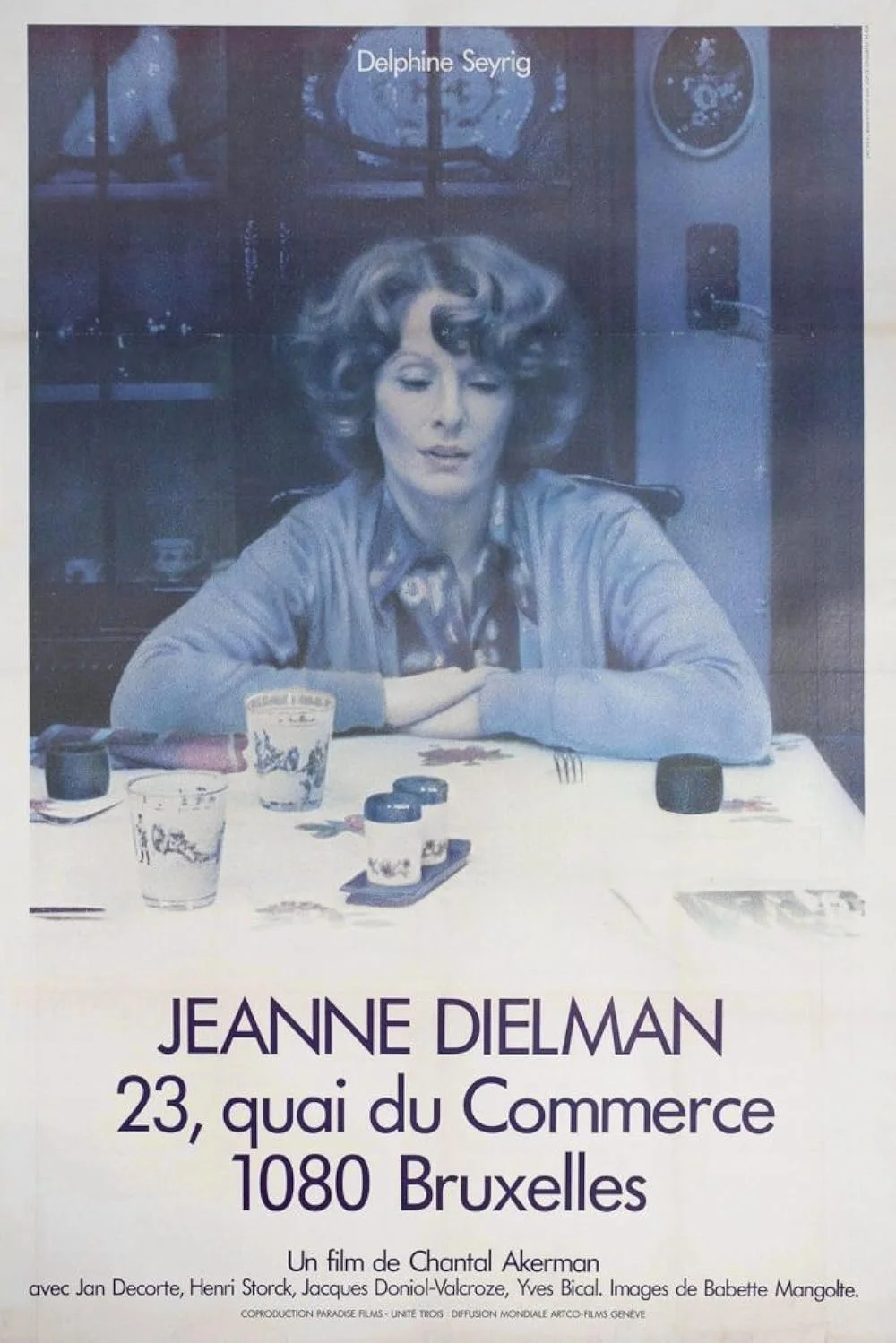
Justin's position is simple: the movie doesn't need to be that long. What it's trying to say could be communicated in a fraction of the runtime. He even jokes the title is too long - seriously? Her whole address too?
And honestly, I understand that perspective.
But where I disagree is this: without that length, how are we supposed to truly know Jeanne’s perspective and story without spending a little time with her?
The film spends hours showing us her daily routine. We watch her clean, cook, and shop. She also cares for her son. We observe the repetition of her life, day after day. We learn that she performs sex work to support herself and her child, and the film presents this reality without sensationalizing it. Honestly, it made sex work make a lot more sense to me. Women have been doing what they need to keep a roof overhead since the dawn of humanity.
At first, it feels ordinary. Maybe even boring.
But that's exactly the point.
The movie forces us to live inside her routine. We become familiar with every detail of her day. We notice when small things go wrong. We recognize disruptions that might seem insignificant in a shorter film because we've spent so much time learning the rhythm of her life.
A condensed version of Jeanne Dielman would certainly get to the point faster. But would it have the same impact?
I'm unsure - it would require fantastic editing at minimum. I’ve seen good montages before so I believe it can be done.
Why the Runtime Matters
The power of Jeanne Dielman comes from accumulation.
The repetitive chores aren’t filler; they are the narrative itself. Anyone who spends real time doing domestic work knows that repetition eventually becomes a kind of rhythm, even a quiet meditation. And without drifting into anything overtly spiritual - there is a long tradition of understanding labor as a site of self‑recognition. In the work, we encounter ourselves. I’ve always loved that. I like discovering who I am through the tasks I return to, the motions I repeat, the small rituals that structure a day.
Every mundane task builds our understanding of who Jeanne is and what her life looks like. The audience slowly develops a relationship with her because we've spent real time in her world. The film doesn't simply tell us she's trapped by routine; it makes us feel that routine.
And because we experience that repetition alongside her - and for long periods of time - the film's dramatic climax lands with far greater force.
If we only spent twenty minutes getting to know Jeanne instead of several hours, would the ending hit as hard?
Would we care as much?
Would we be as willing to empathize with her?
I don’t know. Sounds like someone should run a study.
The murder scene isn't shocking simply because it happens. It's shocking because it happens to her - someone we've spent hours observing, understanding, and perhaps even sympathizing with.
Without that investment of time, the ending risks becoming just another plot point with a sexual scene?
With it, the ending becomes more than just a plot device.
I sympathize with Jeanne - I think it’s because we actually live with her. We learn her rhythms, we watch her move through the quiet, we sit there while she tells us things in her own time. I did two loads of dishes during this movie, which somehow made me like it even more. Domestic solidarity or something.
Patience Is a gift
Some films aren’t asking you to race through a narrative. They’re asking you to inhabit a world - and sometimes that world is profoundly uneventful. This can be uncomfortable. It can be frustrating. It can feel like the film is daring you to look away.Yet frustration, boredom, discomfort, and repetition are not inherently flaws. When used intentionally, they become expressive tools.
The question, then, is not whether a film is “too long.” The question is whether its length is doing meaningful work to get you narratively engaged.
Jeanne Dielman earns its runtime because duration is inseparable from its thematic and emotional impact. The film requires the audience to share Jeanne’s routines, to feel the weight of her domestic repetition, and to experience the slow erosion of her stability. Without that temporal immersion, the film’s conclusion loses its force.
Justin would argue the same message could be delivered more efficiently. I would argue that reducing the time reduces the experience - and sometimes the experience is the point.
Of course, not every long film succeeds. Skinamarink stretches stillness to such extremes that the viewing experience can feel more arduous than illuminating. If that arduousness is intentional, it becomes part of the film’s aesthetic logic. If not, it becomes a structural problem.
As for whether it’s “bad” to do chores while watching movies: if so, I’ve been bad. But honestly, integrating domestic tasks into slow cinema feels less like a violation and more like a parallel practice - a way of inhabiting the film’s rhythms while maintaining your own.
OMG!! GET TO THE POINT!!
I used to hate long, slow films. When I was a teenager, my mom showed me Blade Runner, and I was so bored I genuinely thought I might cry. It took years to develop the kind of patience required to sit with a film that refuses to move quickly.
So if you simply cannot do it - if your media diet is built around your delightful little YouTube shorts and TikToks - then by all means, continue. There is no moral failure in preferring a quick moving narrative.
If you can master the long slog - if you can tolerate duration, repetition, and narrative stillness - you begin to access a different mode of viewing entirely. You start to understand how time itself becomes an artistic material, how boredom can be intentional, and how endurance can produce meaning.
We are meant to enjoy stories. If you’re bored, there is no virtue in enduring it. Walk away, skip ahead, turn it off, or read the Wikipedia summary. There is no reward for suffering through a narrative that isn’t speaking to you. Stories are designed to be engaged with, not survived.
Hey at least it isn’t 607 minutes (10 hours) of Paint Drying…
-Madeline
Last updated: Aug 17, 2026
