Dia Beacon: A Conduit to Industrial Paradise
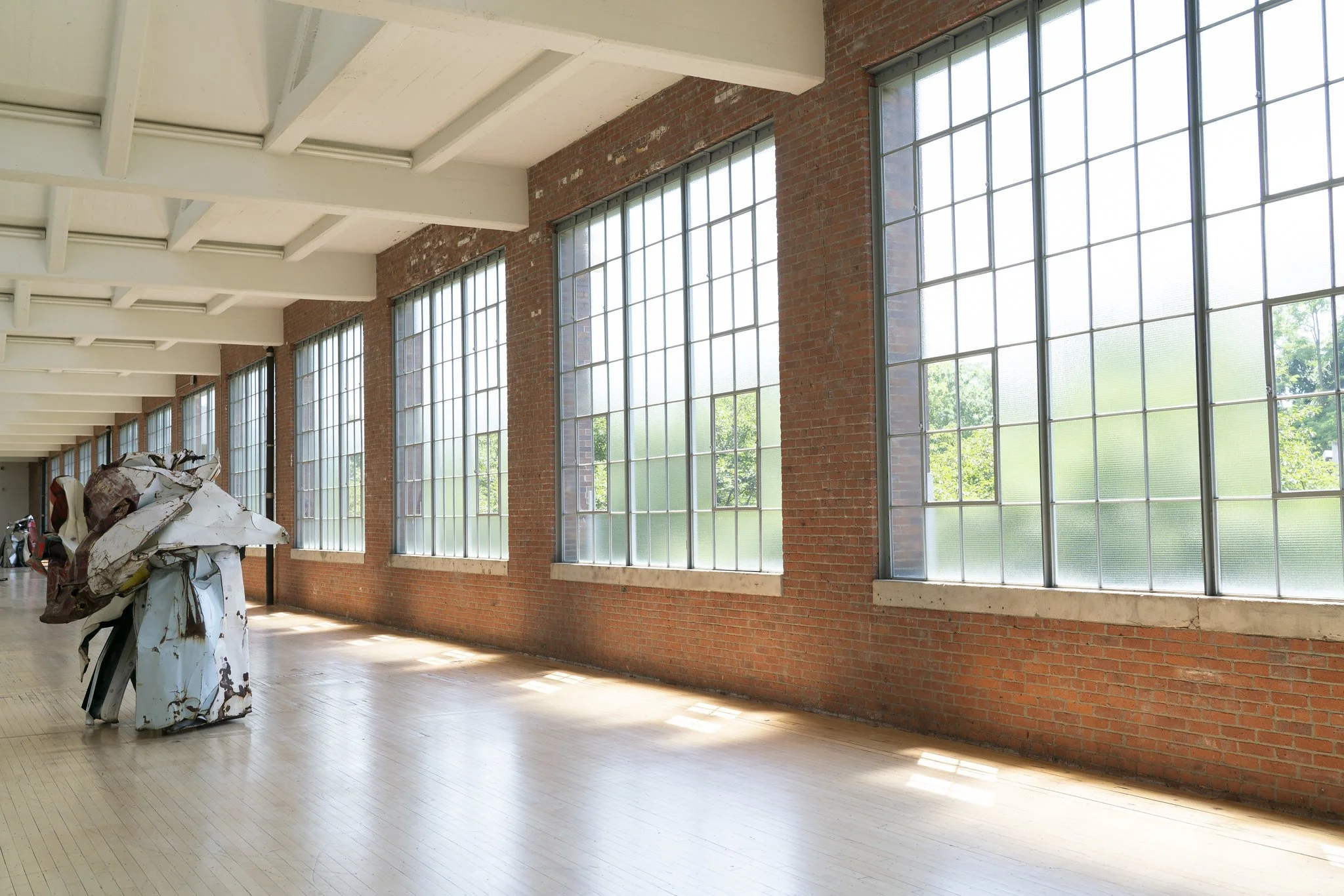
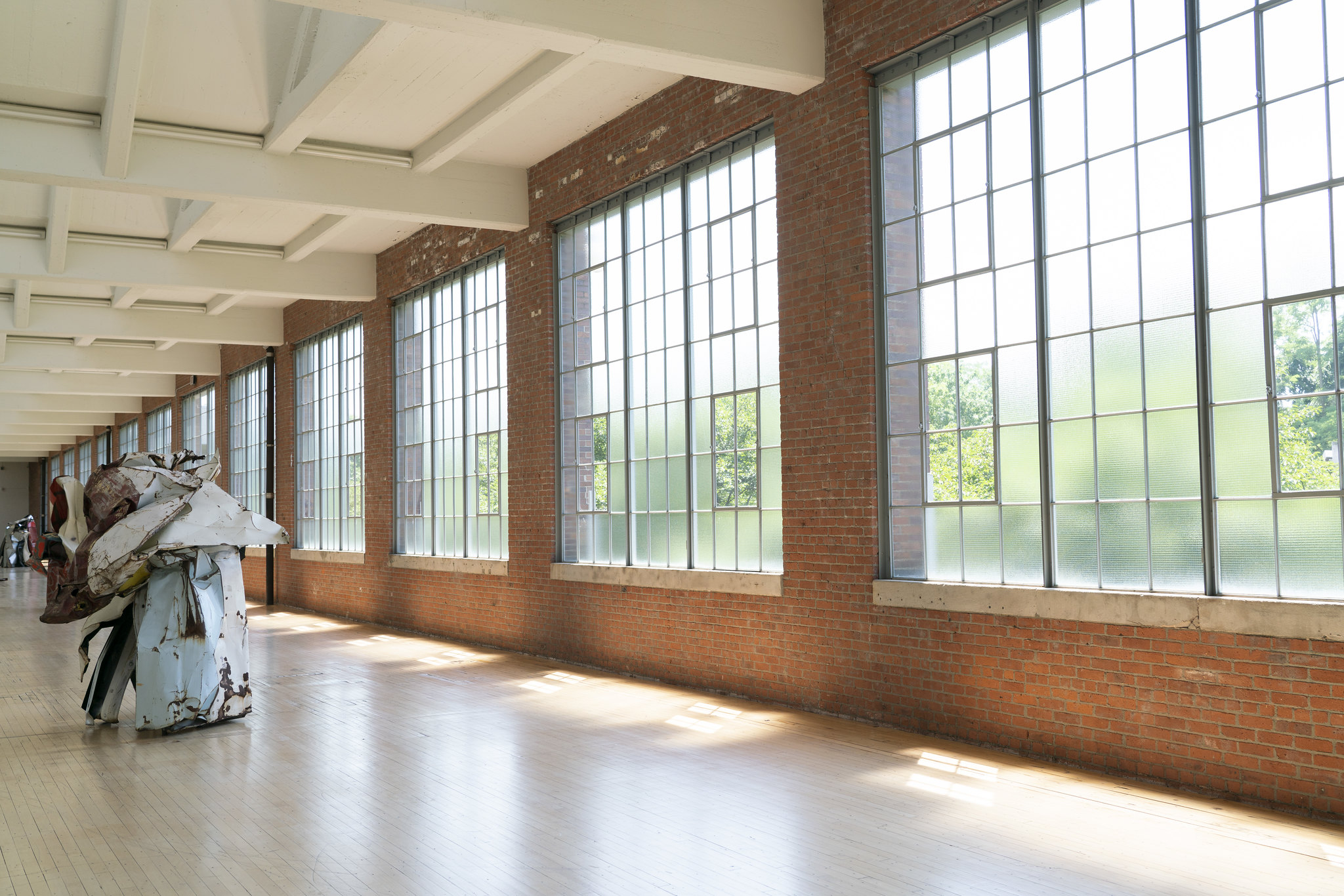
Easy & Me. Dia:Beacon in Beacon, NY, 2019. Easy & Me, https://easyand.me/public/images/dia/1.jpg
Justin and I have been house‑hunting with the enthusiasm of two people who already know the universe will not be handing them an artsy Flashdance‑style warehouse.
I’m trying to be chill about it, but I dream of a place where I can have endless… tables.
A sea of tables housing our monitors and projects.
A place like
DIA BEACON
DIA BEACON
DIA BEACON DIA BEACON
Dia Beacon is a 300,000‑square‑foot former Nabisco factory sitting pretty on the Hudson River. It’s one of twelve Dia locations across New York, but Beacon is the crown jewel - a 90‑minute train ride north of the city and a lifetime’s worth of industrial serenity.
Light, art, space. That slow, cathedral‑quiet exhale you only get in places built for worshipping things.
It’s one of the largest museums of large‑scale contemporary art in the world, home to works by Louise Bourgeois and Richard Serra - pieces so massive they feel less like “installations” and more like relics.
The artwork doesn’t just sit in the room; it inhabits it. The space feels quietly lived‑in, perfectly aligned with the piece’s own originality. It’s the kind of environment - where even a spider would claim its corner like it’s part of the installation.
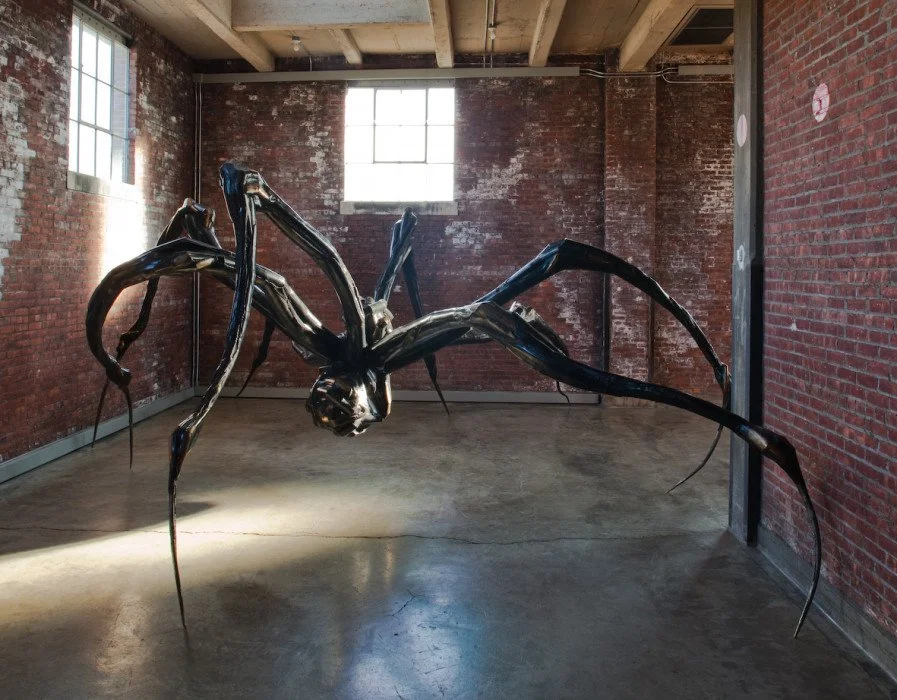
Louise Bourgeois, Crouching Spider, 2003. Courtesy Cheim & Read and Hauser & Wirth. The Easton Foundation/Licensed by VAGA at Artists Rights Society (ARS), New York. Photo: Bill Jacobson Studio, New York
You begin in Grand Central Station, that marble cathedral humming with the shuffle of commuters, and you buy your ticket north.
The train pulls you out of the terminal and into the city’s underbelly - graffiti‑tagged tunnels, brick warehouses, Harlem’s bright murals flickering past like film frames.
Then the concrete finally loosens its grip. The last shards of industrial glass fall away, factories dissolving into houses and parks, and suddenly you’re gliding through an ocean of green.
You’ve slipped out of New York City and into the countryside - oaks and maples along the tracks, a dense, breathing wall of trees escorting you along the Hudson - the river stays beside you the whole way, a reminder of the region’s industrial landscape.
By the time you step onto the platform at Beacon, the ride has already become its own small adventure.
Dia sits only ten minutes up the road, but the air between you and the museum feels like a threshold.
You’re not just arriving; you’re about to cross into an experience - one where art doesn’t simply occupy a space, but the space itself sharpens the way you see it.
I love when a space doesn’t just hold art but actively collaborates with it. Dia feels like an ocean of a warehouse - vast, echoing, room after room shaped to honor whatever an artist is trying to do.
Light, color, scale, shadow, geometry… everything gets its own interaction with light.
The building doesn’t compete; it amplifies.
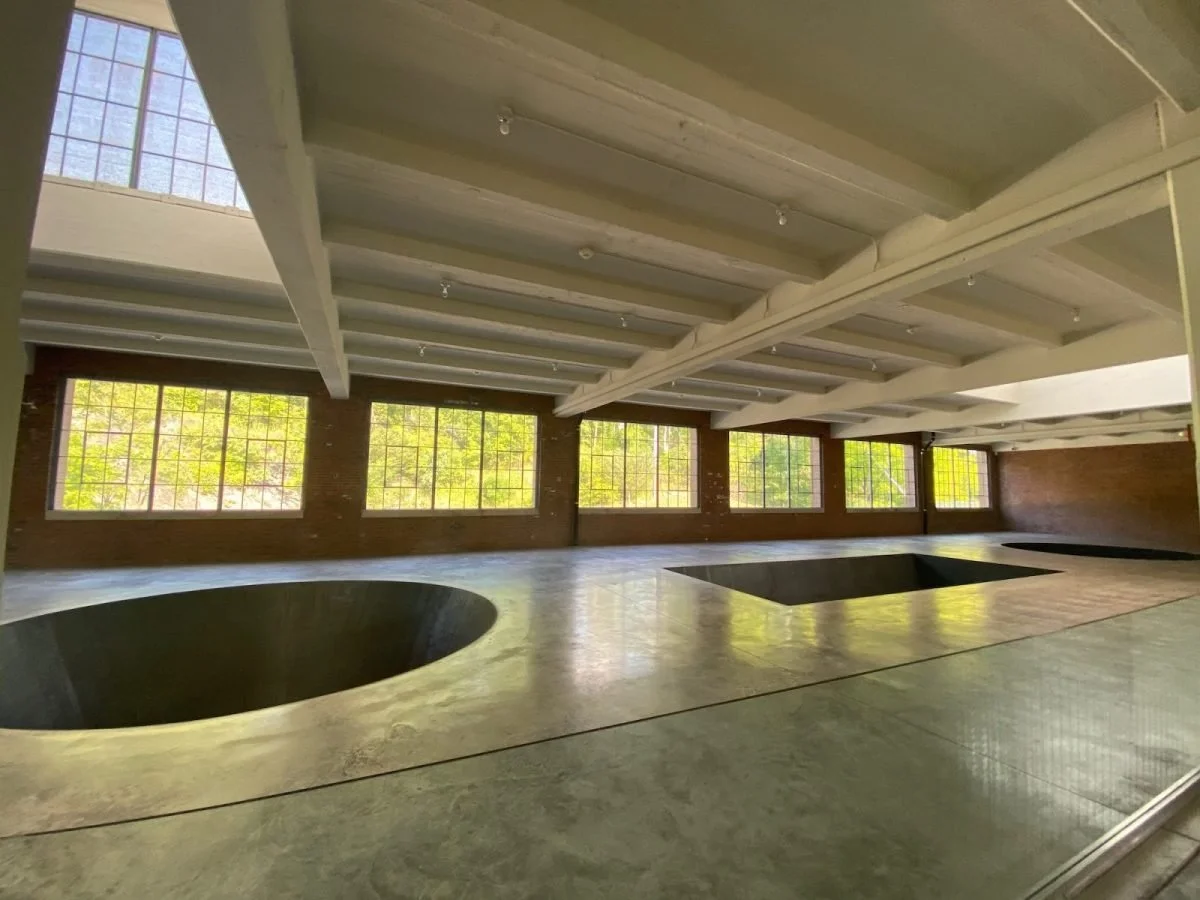
Michael Heizer, North, East, South, West, 1967/2002, Dia Beacon, New York, USA. Jennifer S. Musawwir’s photo.
A neat interaction with space and the ability for an artist to expand beyond the “white cube” norm. What is the “white cube” : a minimalist art gallery style and concept with plain white walls and simple floor where the artwork can inhibit a space.
Let it breathe
As you walk through the dense warehouse - you have interactions with each piece, endless conversations in open space.
It’s not simply shoved into a hot room with 100,000 other humans. It’s not sandwiched between two other masterpieces on a maroon?? wall, why maroon? You are not shuffled along by the roaming herd pushing you from behind.
The one time I went to Versailles, people were taking photos with full‑screen iPads - it was amazing. I’d only ever seen phones used before, so it was… a moment. Every room was packed like sardines. Yikes.
But the work at Dia? They finally get room to breathe. Wide, open galleries where the art can stretch out and you can actually sit with it for a while.
If you’re curious about the journey - how to get there, how the whole thing works - please check out theirguide.
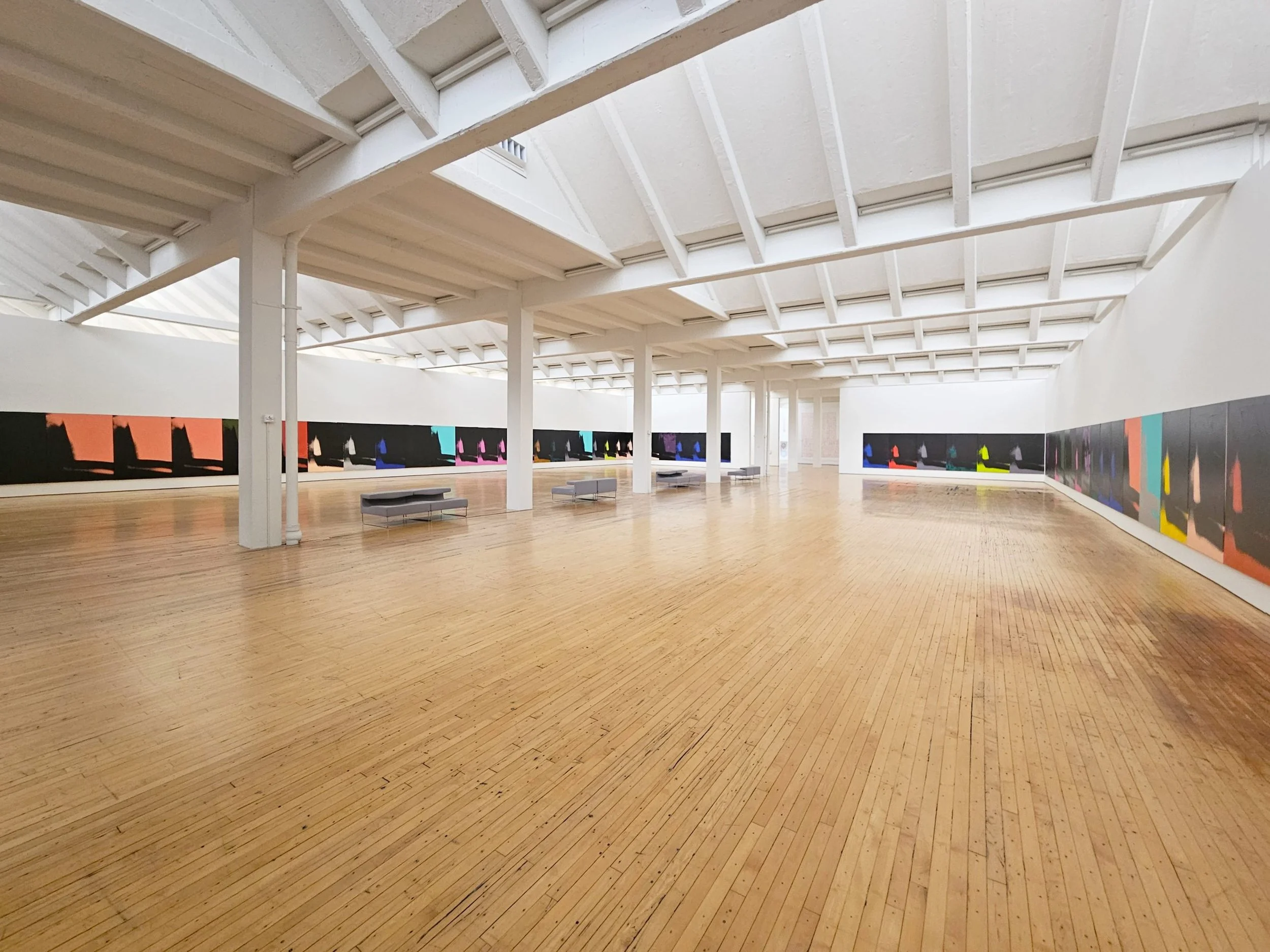
Clemence, Paul. Andy Warhol’s “Shadows” sprawling installation at Dia Beacon. 2026. Side of Culture, 5 Feb. 2026, https://sideofculture.com/2026/02/dia-beacon-from-printing-plant-to-cultural-conduit/.
We see in this photo - Andy Warhol’s prints are able to live in a large display on the walls because Dia can accommodate the wall space needed to show it.
If you love something you have to let it go
For now I’ll have to stick to our apartment and fantasizing about things I can’t have.
I can’t move again, but we desperately need to move.
I have no time to look. My life is chaos and I know it’s my own fault. Plus the housing market is fucking crazy right now.
I love good museums - here’s a list of mine and Justin’s favorites:
The Brooklyn Museum
Centre Pompidou
Dia Beacon
Plains Art Museum
MOMA: PS1
Musee d'Orsay
Sainte-Chapelle
Tate Modern
The Walker
Whitney Museum of American Art
The Brooklyn Museum Centre Pompidou Dia Beacon Plains Art Museum MOMA: PS1 Musee d'Orsay Sainte-Chapelle Tate Modern The Walker Whitney Museum of American Art
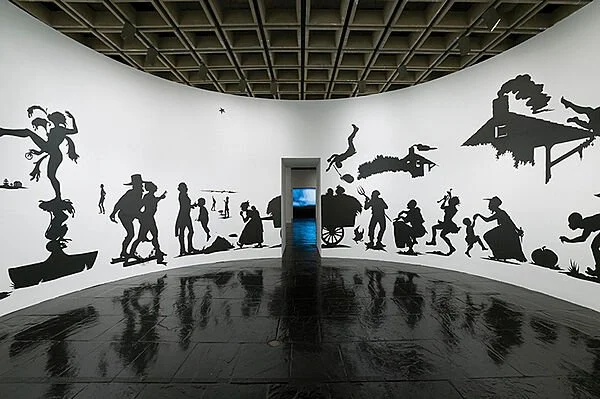
Installation view of Kara Walker: My Complement, My Enemy, My Oppressor, My Love (Whitney Museum of American Art, New York, October 11, 2007–February 3, 2008). Photograph by Sheldan C. Collins
Musee d’Orsay: stunning architecture and paintings
Paris, FranceTate Modern: Modern art next to the Thames
London, EnglandSainte-Chapelle: best glass rose windows I’ve ever seen - spiritual
Paris, FranceQueens, New YorkReina Sofia: national and international Spanish art - modern and contemporary art
Madrid, SpainWalker Art Center: fun building, special art
Minneapolis, MinnesotaThe Brooklyn Museum: Feminist American art
Brooklyn, New YorkWhitney Museum of American Art: amazing American art
New York, New YorkFargo, North Dakota
Always hit me with this weird mix of envy and awe. Every time Justin and I filmed a wedding there, I’d be quietly seething - like, how dare this space be that gorgeous.
I got lucky enough to catch Kara Walker’s My Complement, My Enemy, My Oppressor, My Love, and it changed me. Those stark silhouettes cracked open everything I thought I understood about slavery, violence, and the stories I thought I knew.
Art appreciation isn’t just a hobby; it’s a whole education. It teaches you about other cultures, people living these histories, and the truths that hit hard when they’re ten feet tall on a gallery wall and pretty graphic. Exposing the truth of the horrible realities of people’s suffering - the violent and brutal nature.
I’m so thankful I have had the experiences to converse with art from other cultures and backgrounds. Out of all the shows I’ve seen, that one hits in my mind still. An upsetting experience with significance.
-Madeline
Last Updated: Sept. 17, 2026